Currently I am interested in a project that I know is bigger than I can manage in my head but I have been taunted by it all of my life and I want to share it with others, so I thought I would make a start.
I want to understand the implication of Christian theology clashing and merging with Platonic, neo-Platonic and medieval philosophy through a journey of reading and understanding most of the works of Plato, journey through Aristotle and Plotinus before moving into the medieval philosophers.
My main inspiration and source is the Jesuit’s Frederick Copleston’s “A History of Philosophy” vol. 2 on Mediaeval Philosophy.
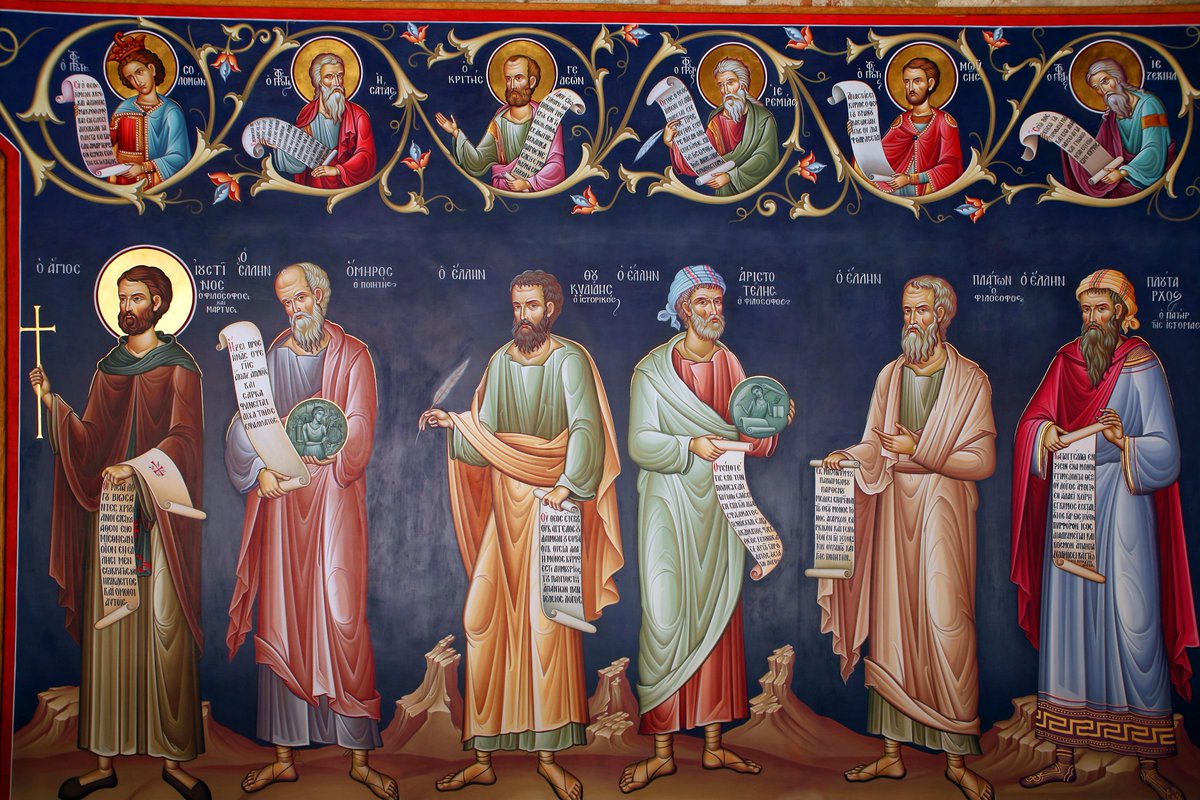
It is not surprising that as the Christian faith expanded it became increasingly important to be able to express what it stood for. So from the beginning although its doctrines came from the New Testament’s revelation there was the pressure to defend it against philosophical attacks but also expressed it is way that the more versed in philosophy Christians needed to have a comprehensive view of the world and human life but also had the desire to understand further the dogmas of faith, to basically make explicit concepts that were implicit. The idea that Christ was god and man was well accepted but the implications were important and pagan philosophy was where it was obvious to look for tools and sometimes answers.
 Credo ut intellegam